
Wind turbines are built to last. They stand in open fields, rural communities, coastal areas, and windy corridors, producing power for many years.
At first glance, it may seem like a wind turbine should be easy to recycle. Much of it is metal. The tower is large steel. The machinery includes valuable materials. The wiring and components can often be recovered.
That part is mostly true. The U.S. Department of Energy says about 85% to 90% of a wind turbine’s mass is made from materials that are more easily recycled, such as steel, aluminum, copper, and iron. The harder part is often the blades, which are made from strong composite materials.
That is the important public lesson.
Some products are easy to use, but difficult to take apart.
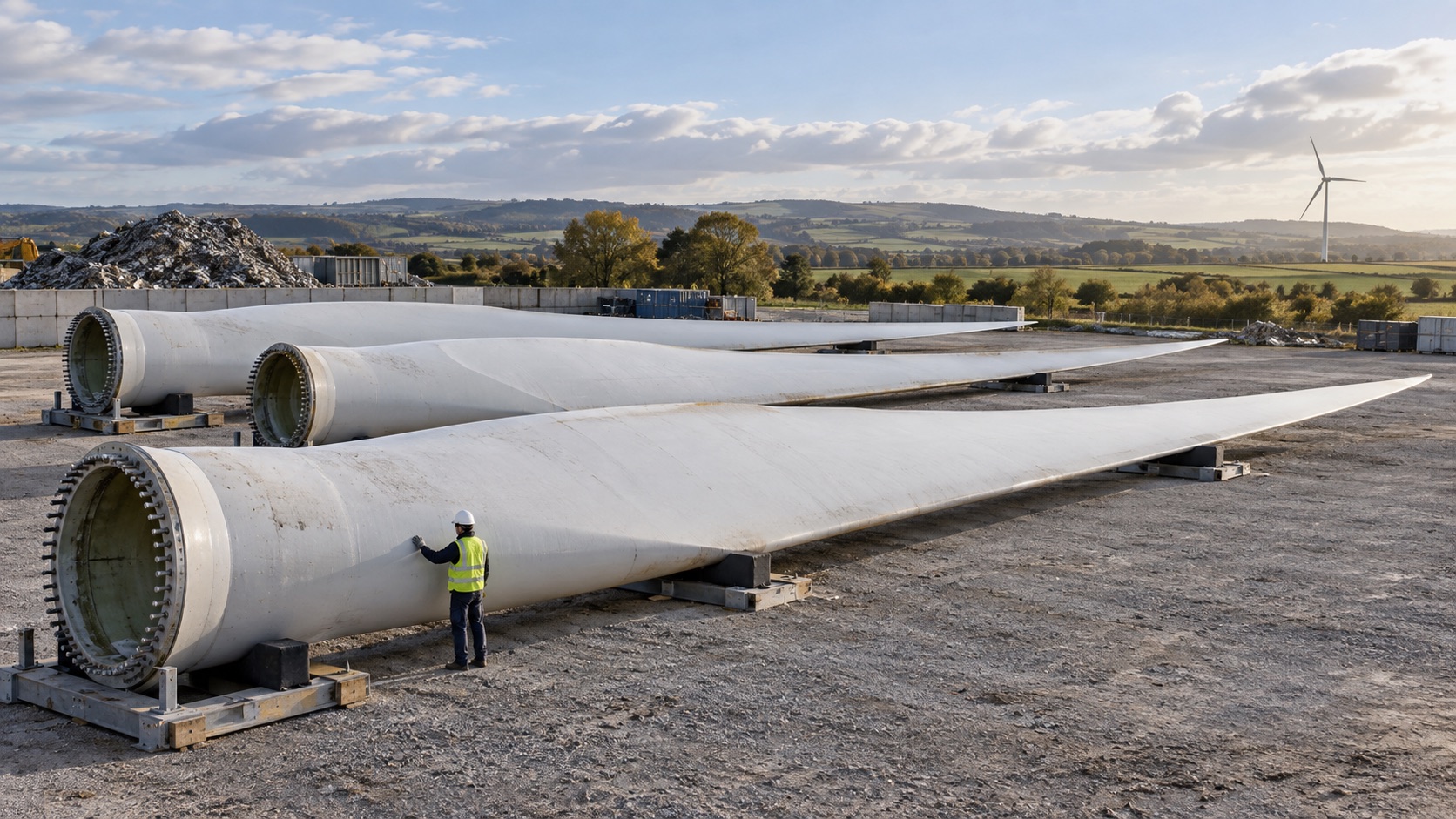
Wind turbine blades are designed to be strong, light, weather-resistant, and durable. They need to handle wind, speed, stress, rain, heat, cold, and long operating lives. That strength is useful while the turbine is working. But when a blade reaches the end of its service life, that same strength makes the blade harder to break down, move, recycle, or reuse.
This is not a reason to dismiss wind energy. It is a reason to plan carefully.
A retired blade is not like a small household item. It is very large. Moving it can require special equipment, transportation routes, storage space, and recycling or reuse partners. Rural communities may need to think about roads, land access, hauling distance, and local capacity.
There is also a design lesson here. The waste challenges of the future are often created at the beginning of a product’s life. If something is designed only for performance during use, but not for repair, reuse, or recycling after use, communities may face harder decisions later.
The wind industry is already exploring better options, including blade recycling, repurposing, and newer blade materials. DOE notes that as end-of-service processing methods mature and secondary supply chains develop, more opportunities for blade recycling and repurposing are expected.
For ordinary people, this topic is relatable because it shows how waste is changing. Waste is no longer just trash bags at the curb. It can be large infrastructure equipment that served a useful purpose for decades and then needs a careful next step.
For government and community leaders, the lesson is simple: new infrastructure should include an end-of-life conversation from the beginning.
The Promise Worldwide is part of the broader discussion around waste, materials, and infrastructure because these issues are becoming more connected. Energy systems, material systems, transportation systems, and waste systems now overlap more than ever.
Key Insight
Wind turbines are mostly recyclable by weight, but blades show why large modern equipment needs end-of-life planning before it becomes a waste challenge.