
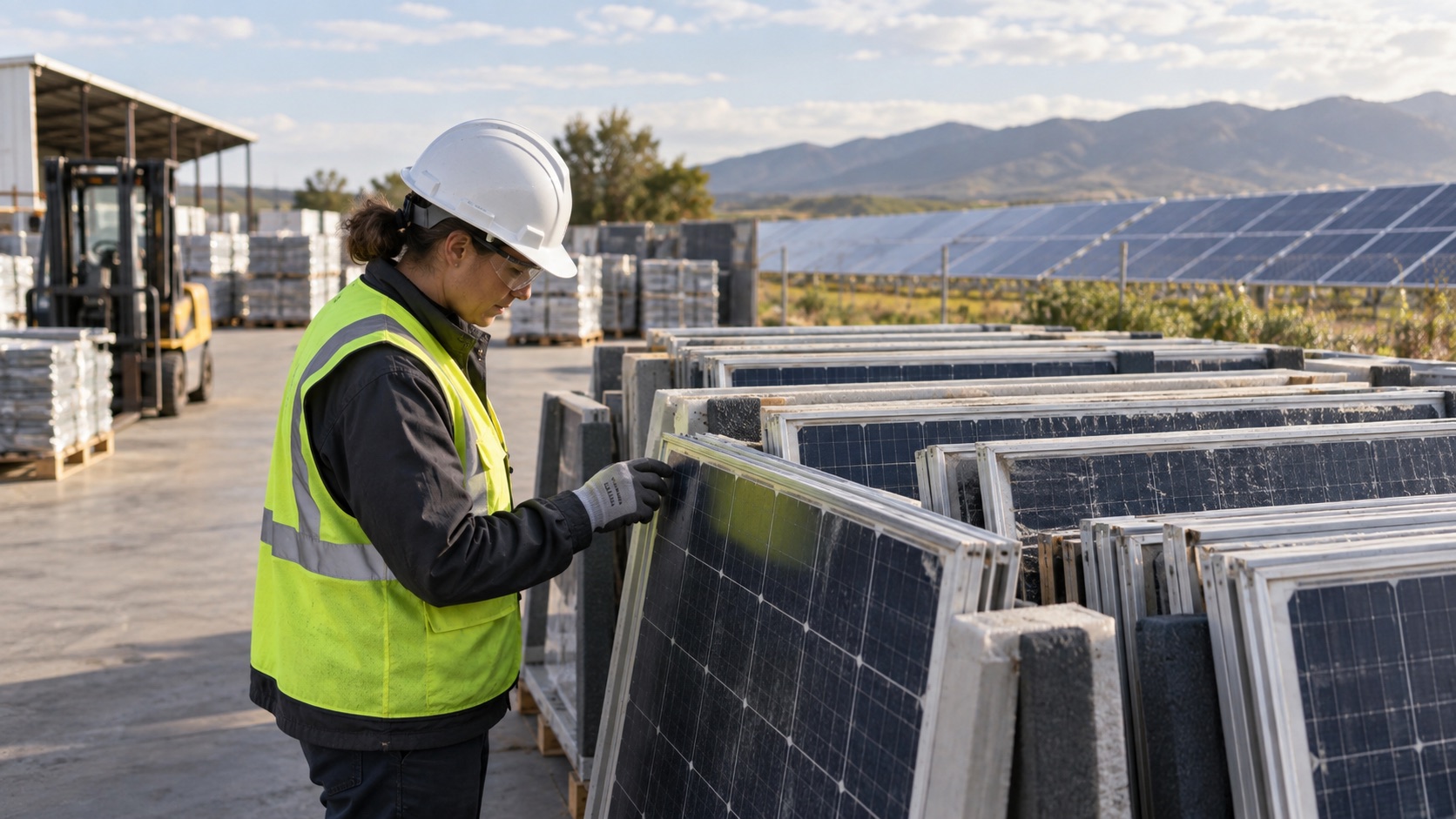
Solar panels have become a familiar part of the clean energy conversation. They are on homes, schools, farms, businesses, warehouses, and large solar sites. Most people think about solar panels as something that helps produce cleaner electricity, and that is the part of the story most often discussed.
But every product also has an after-use story.
Solar panels do not last forever. EPA notes that solar panels typically have a lifespan of more than 25 years, and when they reach the end of their life, they become a waste stream that must be managed safely. Some panels may contain metals such as lead or cadmium, which can require special handling depending on the panel type and regulatory requirements.
This does not mean solar panels are bad. It simply means that clean energy equipment still needs a responsible end-of-life plan.
For a homeowner, an old solar panel may feel like a rare issue. For a city or county, the challenge can become larger over time. If many panels were installed during the same decade, many may also need repair, replacement, or removal around the same period. That can create a new type of waste stream that many local systems were not originally built to handle.
There is also a practical side to the issue. Solar panels are large. They can be heavy. They may need careful removal from rooftops or solar fields. They may need to be stored safely before being transported. Some parts may be recyclable, but recycling depends on access to the right facilities and the cost of moving the material.
This is where the public conversation needs to become more complete.
A product can support clean energy during its life and still require smart planning at the end of its life. That is true for solar panels, batteries, wind equipment, electronics, appliances, and many other modern products.
The solar panel conversation is really a reminder that sustainability is not only about what happens while a product is working. It is also about what happens when the product is removed, replaced, damaged, or no longer useful.
For communities, solar panel waste is still an emerging issue compared with everyday trash. But it is easier to plan for a waste stream before it becomes urgent than after it has already grown.
The Promise Worldwide is paying attention to topics like this because modern waste is changing. Communities are no longer dealing only with paper, food, glass, and plastic. They are also dealing with the long-term afterlife of clean energy equipment, electronics, batteries, appliances, and other complex products.
Key Insight
Solar panels can support cleaner energy for decades, but communities still need a responsible plan for what happens when panels are removed, damaged, or replaced.