
When people think about tire waste, they usually imagine old tires stacked behind a shop, dumped on a roadside, or taken to a recycling center.
But tires also create a much smaller waste stream every day.
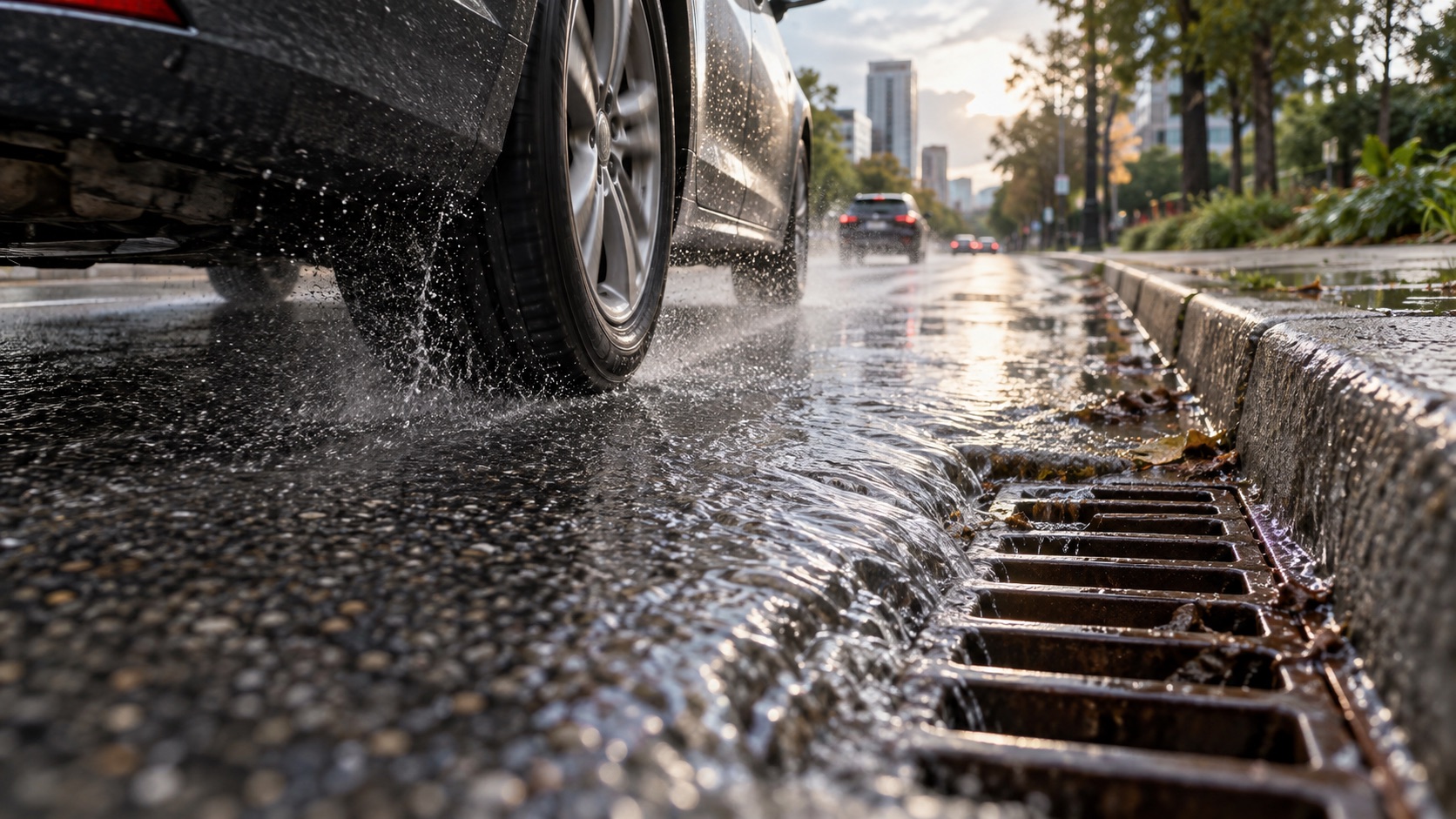
As vehicles drive, tires wear down. Tiny particles come off the tire and road surface. These particles can collect on roads, parking lots, and streets. When it rains, stormwater can carry them into drains, streams, rivers, and nearby water systems.
EPA explains that tires release particles into the environment as they wear down through contact with roads. EPA is also studying 6PPD-quinone, a chemical formed when 6PPD, a tire-protection chemical, reacts with ozone in the air. Research continues on how these chemicals move through stormwater and affect the environment.
This topic can sound technical, but the everyday idea is simple.
Not all waste goes into a trash can.
Some waste comes from normal daily activities: driving to work, delivering goods, riding buses, using parking lots, and moving through cities. Because the particles are small, people may not notice them. But they still become part of the waste and water conversation.
Tire dust also shows how roads and water systems are connected. A road is not only a surface for cars. It is also part of a drainage system. Rain carries material from the road into storm drains. Storm drains may connect to creeks, rivers, lakes, or coastal waters.
That means waste planning is not only about bins and trucks. It can also involve street sweeping, stormwater filters, drainage design, road materials, traffic patterns, parking lots, and water monitoring.
This issue is still being studied, and not every community will face the same level of risk. A busy highway, a large parking area, a small rural road, and a residential street may all have different conditions. Local weather, drainage, traffic volume, and nearby waterways matter.
For the public, this is a helpful case study because it shows that waste is not always visible. Some waste is hidden in daily systems that people depend on.
For cities, it shows why departments that seem separate may need to communicate. Transportation, stormwater, public works, waste management, and environmental teams may all touch different parts of the same issue.
The Promise Worldwide is paying attention to topics like tire dust because modern waste is not always obvious. Some of the most important waste conversations are about small materials moving through large systems.
Key Insight
Tire dust shows that some waste is invisible, and that roads, stormwater, and environmental planning are more connected than most people realize.