Hospitals, clinics, labs, dental offices, pharmacies, nursing homes, and home-care programs all create waste.
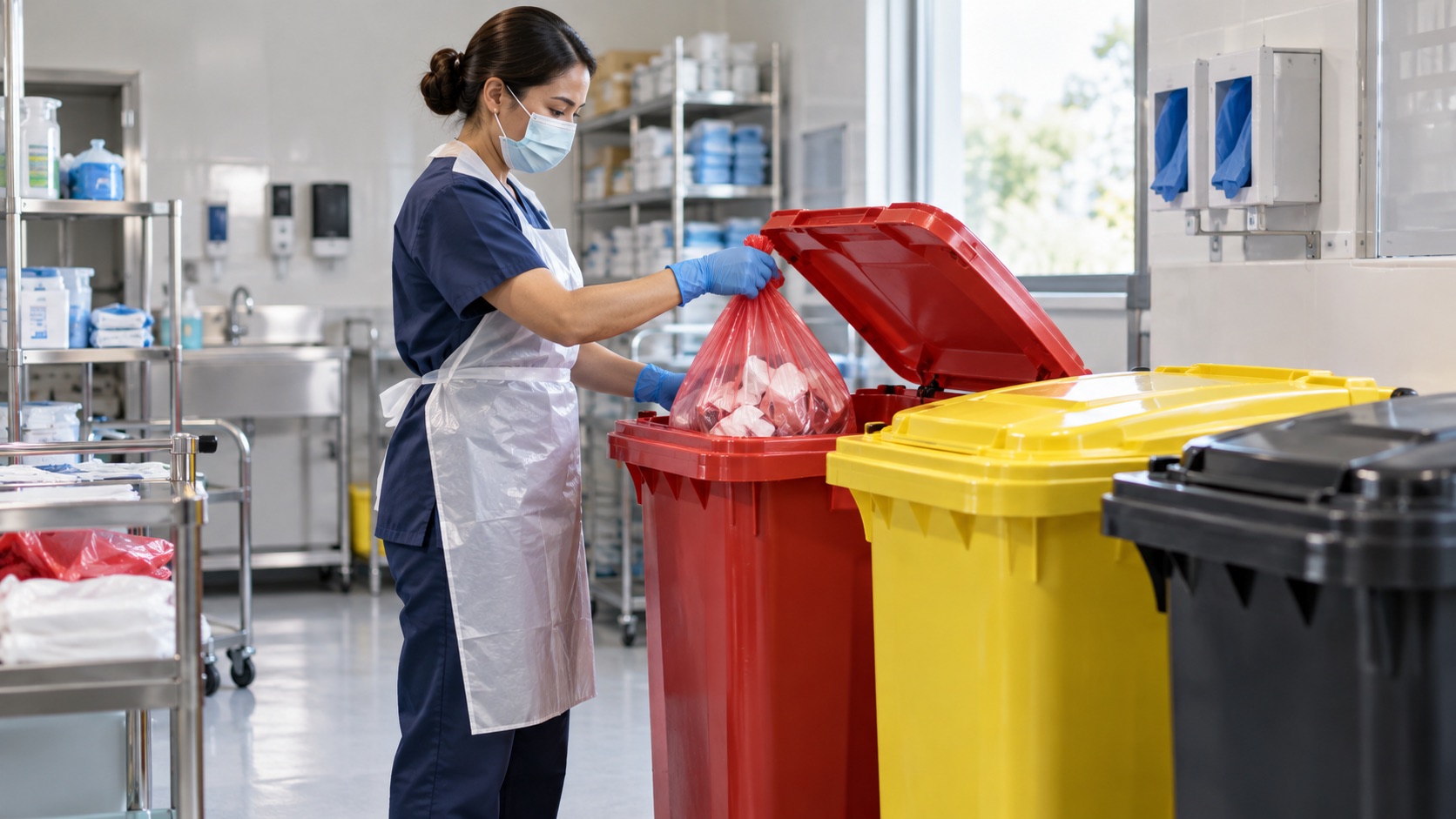
Some of that waste is ordinary: paper, packaging, food wrappers, boxes, and office supplies. Some of it is different and needs special care: used needles, blood-contaminated materials, medicine waste, chemicals, lab items, or infectious waste.
The World Health Organization says about 85% of waste from health-care activities is general, non-hazardous waste. The remaining 15% is considered hazardous and may be infectious, toxic, chemical, or radioactive.
That number is important because it shows why sorting matters.
If safe waste and hazardous waste are mixed together, more material may need special handling. If hazardous waste is not separated correctly, it can create risks for workers, patients, waste haulers, cleanup crews, and the public.
Medical waste also becomes more complicated when it leaves the building where it was created. It may pass through storage rooms, carts, containers, trucks, transfer points, treatment systems, and disposal facilities. Each step needs clear handling.
A real-world example shows why this matters. In September 2024, officials in Ocean City, Maryland, temporarily closed ocean swimming after waste and medical debris washed ashore along beaches in Maryland, Delaware, and Virginia. The town said it was monitoring the situation and urged people to follow the closure for safety.
That incident should be discussed carefully. Public reports did not establish one simple cause in the available information. It is not useful or fair to blame one group without evidence.
But it does show how quickly waste can become a public concern when it appears in a place people do not expect, especially a beach, park, school, or neighborhood.
For ordinary people, medical waste may also be a household issue. Some people use needles or medical devices at home. Others have old medicine, testing supplies, or health-related packaging. If there is no clear guidance, people may not know what belongs in regular trash and what needs special handling.
This case study is about the importance of simple systems: clear containers, clear labels, trained staff, trusted contractors, safe storage, and public instructions that people can actually understand.
For The Promise Worldwide, this topic fits into the larger waste awareness conversation. Modern waste is not one simple category. Different materials need different levels of care, and communities benefit when those pathways are clear.
Key Insight
Medical waste safety depends on clear sorting, careful handling, and trusted movement from the place it is created to the place it is treated or disposed.