
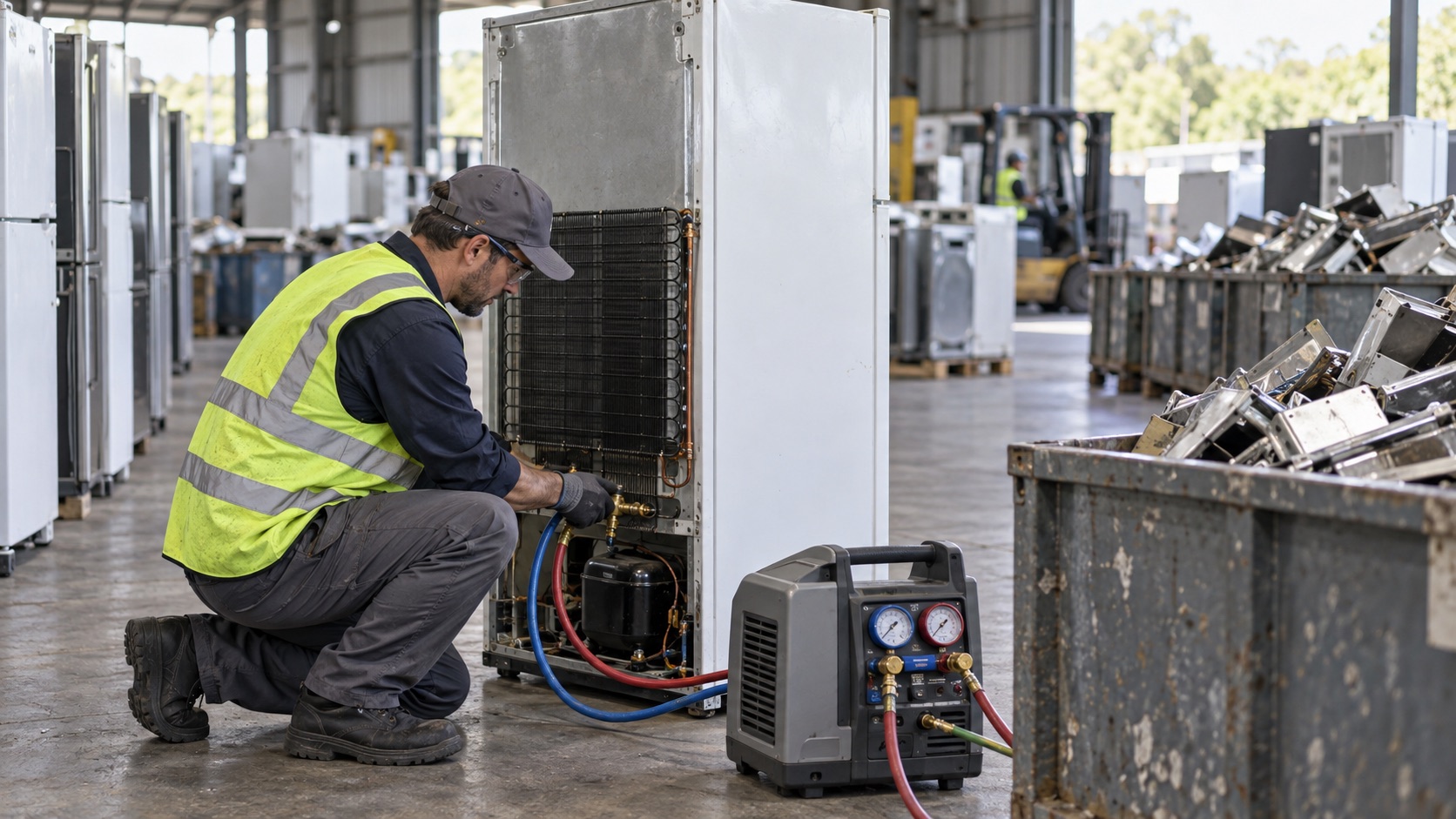
An old refrigerator may look like a large metal box.
But it is more complicated than that.
Refrigerators, freezers, air conditioners, and dehumidifiers can contain refrigerants, oils, metals, plastics, foam, glass, wires, and other parts. Some components need special handling before the appliance can be recycled or disposed.
EPA explains that appliance recycling typically includes recovering refrigerant and removing hazardous components before the appliance is shredded or processed. EPA also notes that hazardous components such as PCBs, mercury, and compressor oil must be removed from appliances before disposal under applicable requirements.
This topic is easy for households to understand.
A family buys a new refrigerator. The old one gets moved to the garage, placed outside, picked up by a hauler, or taken by an appliance company. After that, most people do not know what happens.
The appliance may pass through several hands: the homeowner, landlord, retailer, delivery team, scrap collector, waste hauler, metal recycler, or disposal facility.
That chain matters because refrigerants and certain components should be handled properly. If responsibility is unclear, the appliance may not be managed as carefully as it should be.
There is also a space issue. Appliances are bulky. They take up room on curbs, in alleys, at apartment complexes, in storage areas, and at disposal sites. They can be difficult for residents to move and expensive for municipalities to collect.
For cities, old appliances are part of a larger bulky-waste challenge. A bulky item is not necessarily dangerous, but it can be difficult to manage because it does not fit into normal carts or collection routes. Refrigerators add another layer because they may contain materials that require special steps.
For the public, the message should be simple and non-judgmental: old appliances are not just “big trash.” They are equipment with parts that may need proper recovery.
This case study also connects to a larger idea. Many items in modern life are made from mixed materials. They may be useful for years, but when they stop working, communities need systems that can handle more than just size and weight.
For The Promise Worldwide, appliance disposal is a useful awareness topic because it shows how everyday household items can involve material recovery, worker safety, environmental care, and public convenience.
Key Insight
Old refrigerators and cooling appliances are bulky, but they also contain materials that need careful handling before recycling or disposal.