
Some waste stays where it is placed.
Other waste keeps moving.
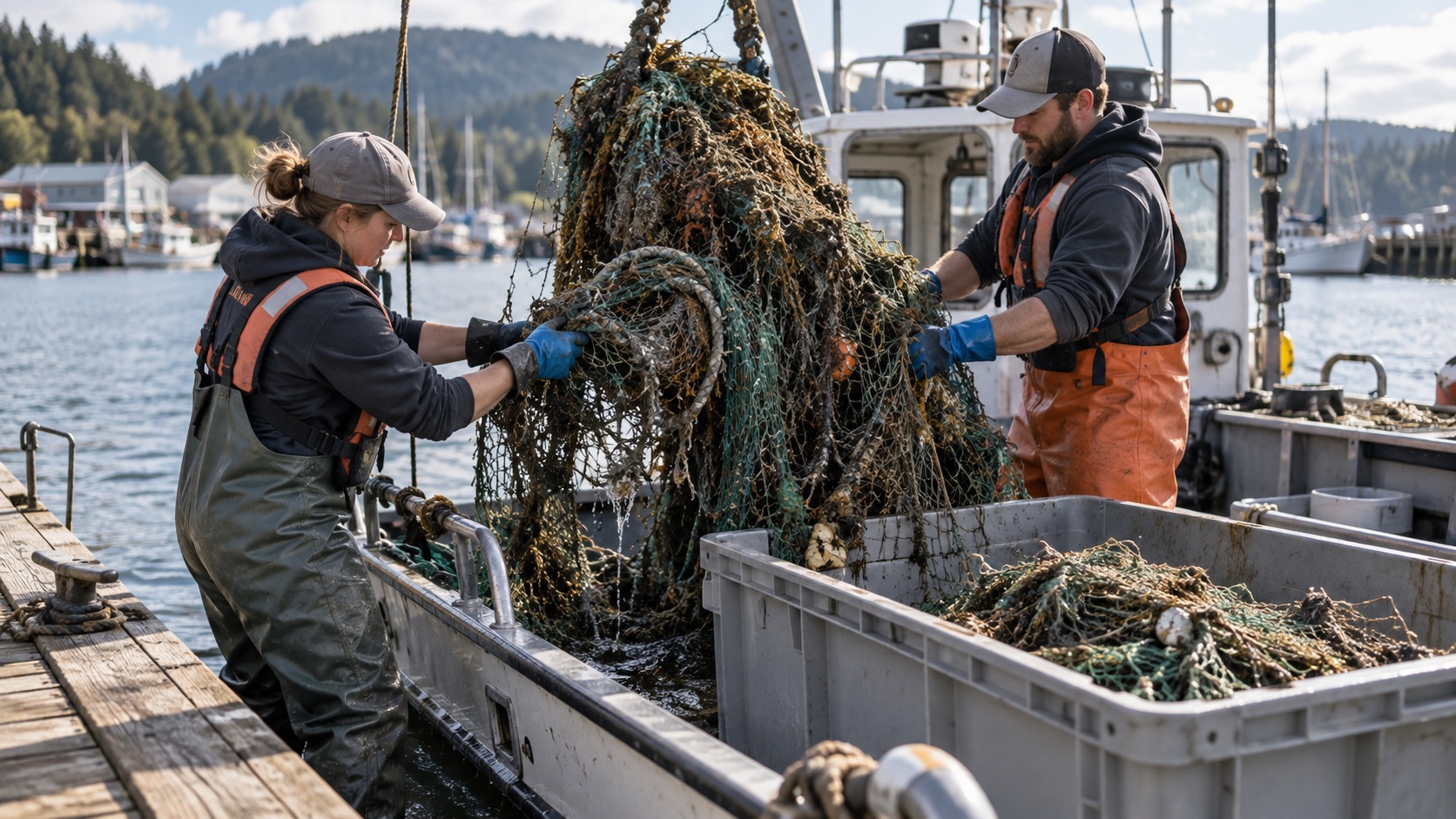
Lost or abandoned fishing gear is one example. Nets, ropes, traps, lines, and other gear can remain in the water long after they are no longer being used. NOAA describes derelict fishing gear as a form of marine debris, and NOAA-supported projects have worked to remove large amounts of gear from coastal and ocean areas, including efforts in Hawai‘i focused on more than 100 metric tons of derelict fishing gear.
This topic may feel far away from people who do not live near the ocean, but it teaches an important lesson about waste.
Some waste does not stay in one place after it is lost.
Fishing gear can move with currents. It can wash onto beaches. It can get tangled near reefs, boats, docks, and shorelines. It can be heavy, wet, dirty, and difficult to remove. Once it is in the water, collection is much harder than normal waste pickup.
For coastal communities, this can affect tourism, cleanup work, fishing operations, public spaces, and local ecosystems. For fishers, it can be a business issue too. Gear costs money, and losing it can affect operations.
The challenge is practical. Old gear may need dockside collection points, transport, sorting, storage, and partnerships. Some materials may be reusable or recyclable. Others may be too damaged or mixed with other debris. The final path depends on condition, material type, contamination, and available local options.
This is not about blaming fishers or coastal communities. Fishing is an important industry and food source. The point is that gear loss is part of the larger waste and materials conversation.
It also shows why prevention is often easier than cleanup. Once waste is spread across water, beaches, reefs, and remote areas, it becomes much harder and more expensive to manage.
For The Promise Worldwide, this case study fits the broader theme of responsible waste planning. It shows that waste systems do not end at landfills or curbside bins. Waste can move across land, water, industries, and communities.
Key Insight
Lost fishing gear shows how some waste can keep moving long after people lose control of it, making prevention and collection planning especially important.