
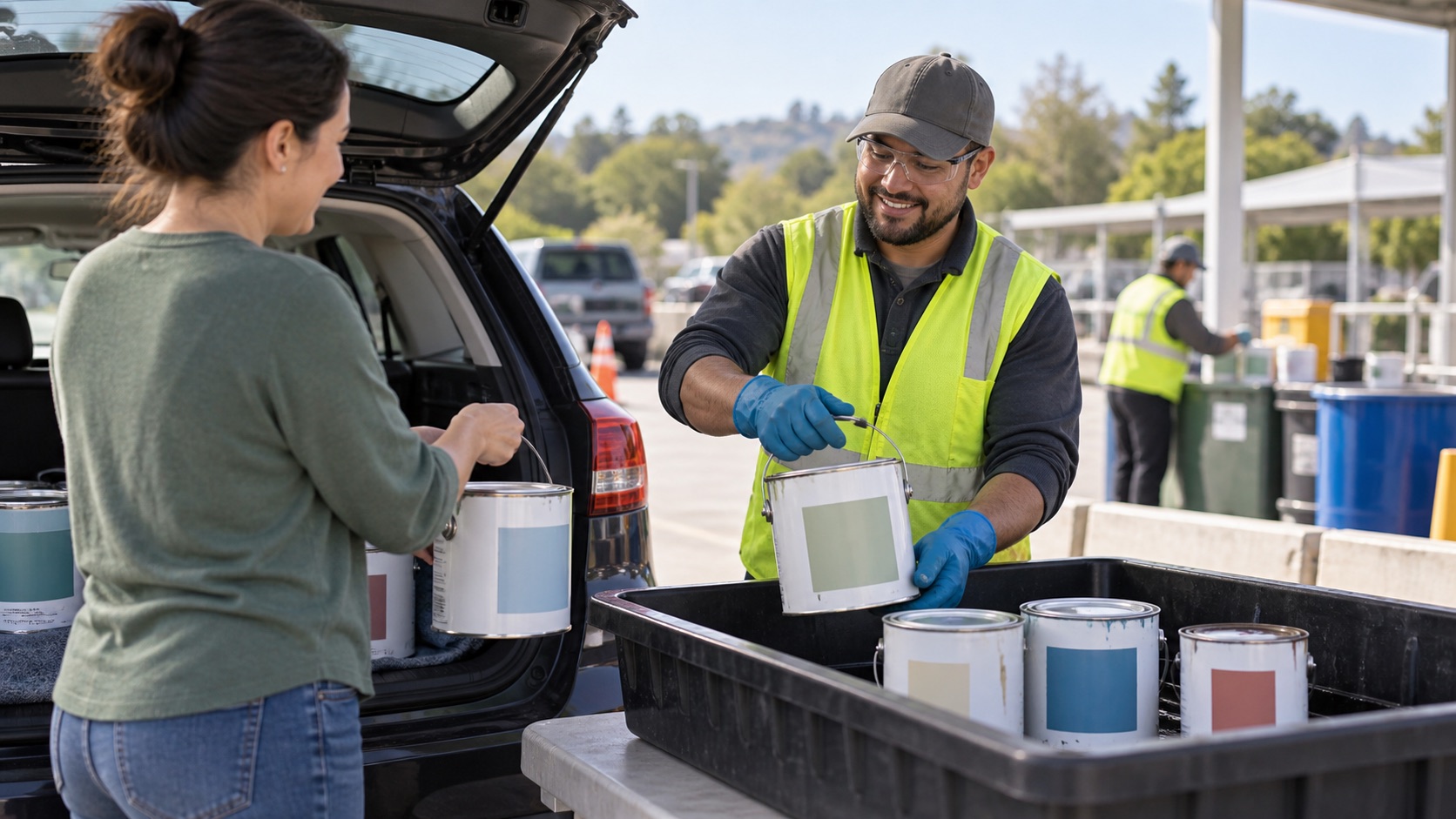
Almost every home, apartment, school, office, or rental property has leftover paint somewhere.
A half-used can sits in the garage. A landlord stores old wall paint. A school keeps leftover maintenance paint. A contractor has partial cans after a job. A homeowner changes colors and no longer needs the old supply.
Leftover paint feels small, but it can be hard to manage.
Paint may be water-based or oil-based. Some may still be usable. Some may be dried out. Some may need special handling. Some may be accepted at drop-off locations, while other types may follow different local rules.
California’s paint stewardship program shows how much organization can sit behind this one household item. CalRecycle requires paint stewardship organizations to submit annual reports, and in 2026 CalRecycle found PaintCare’s 2025 annual report complete. CalRecycle also notes that recent state law changes added more products to the paint stewardship program.
The public lesson is simple: common items can still need special instructions.
When people do not know what to do with leftover paint, it may sit unused for years. It may be thrown away incorrectly. It may be left behind during a move. It may create storage problems for landlords, maintenance teams, contractors, or public agencies.
Paint also connects to the idea of product responsibility. A product’s life does not end when the customer stops using it. There may still be material left in the container, and that material needs a safe and practical next step.
For government and communities, paint waste is part of household hazardous waste planning. It requires drop-off access, public awareness, retailer participation, contractor education, and program tracking.
For ordinary people, the message should be friendly and clear: leftover paint is common, and people need simple ways to handle it responsibly.
For The Promise Worldwide, paint is another example of why modern waste is not one category. Communities deal with everyday materials that are useful in one setting and complicated after use.
Key Insight
Leftover paint is common, but it still needs simple public guidance, convenient collection options, and responsible program management.